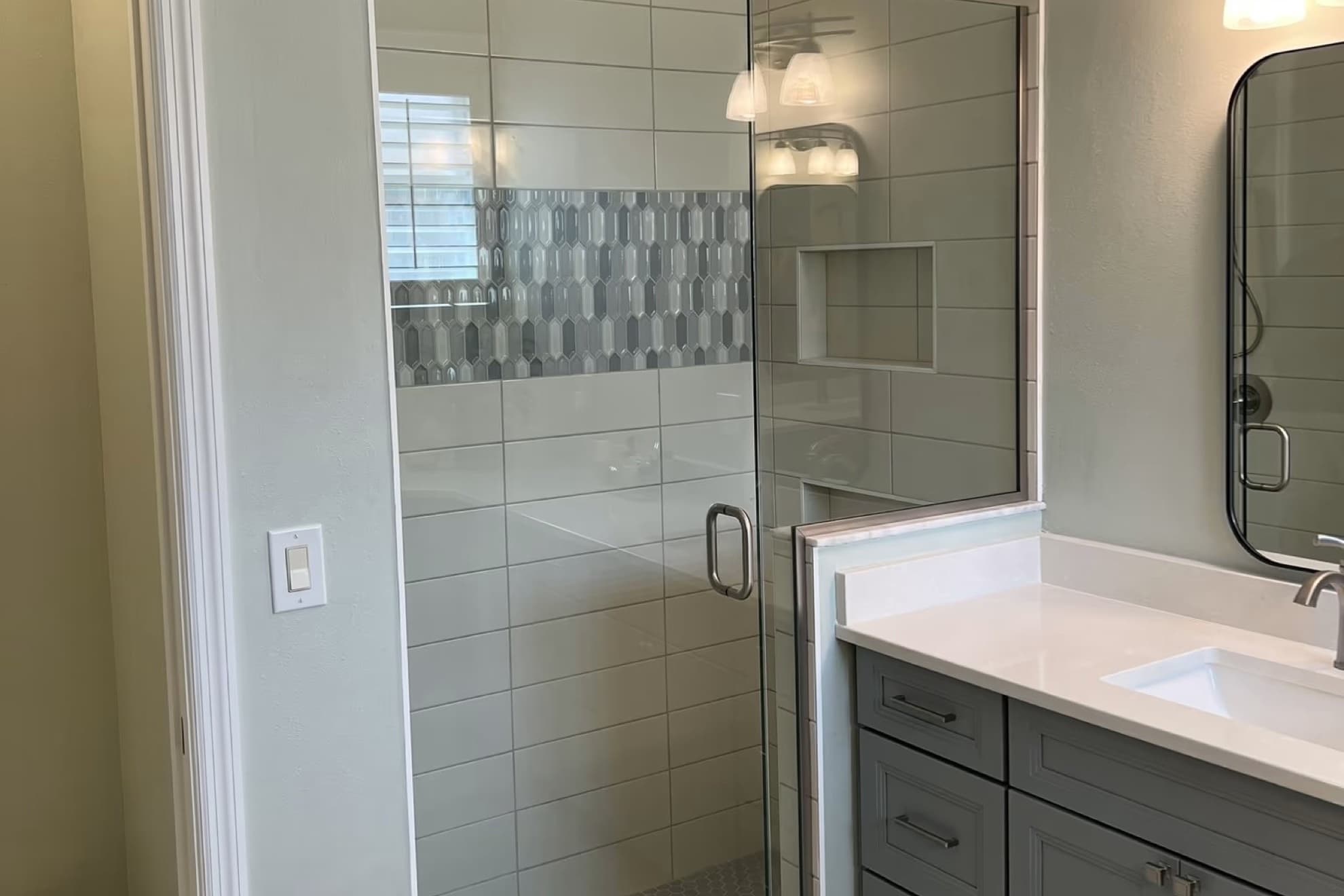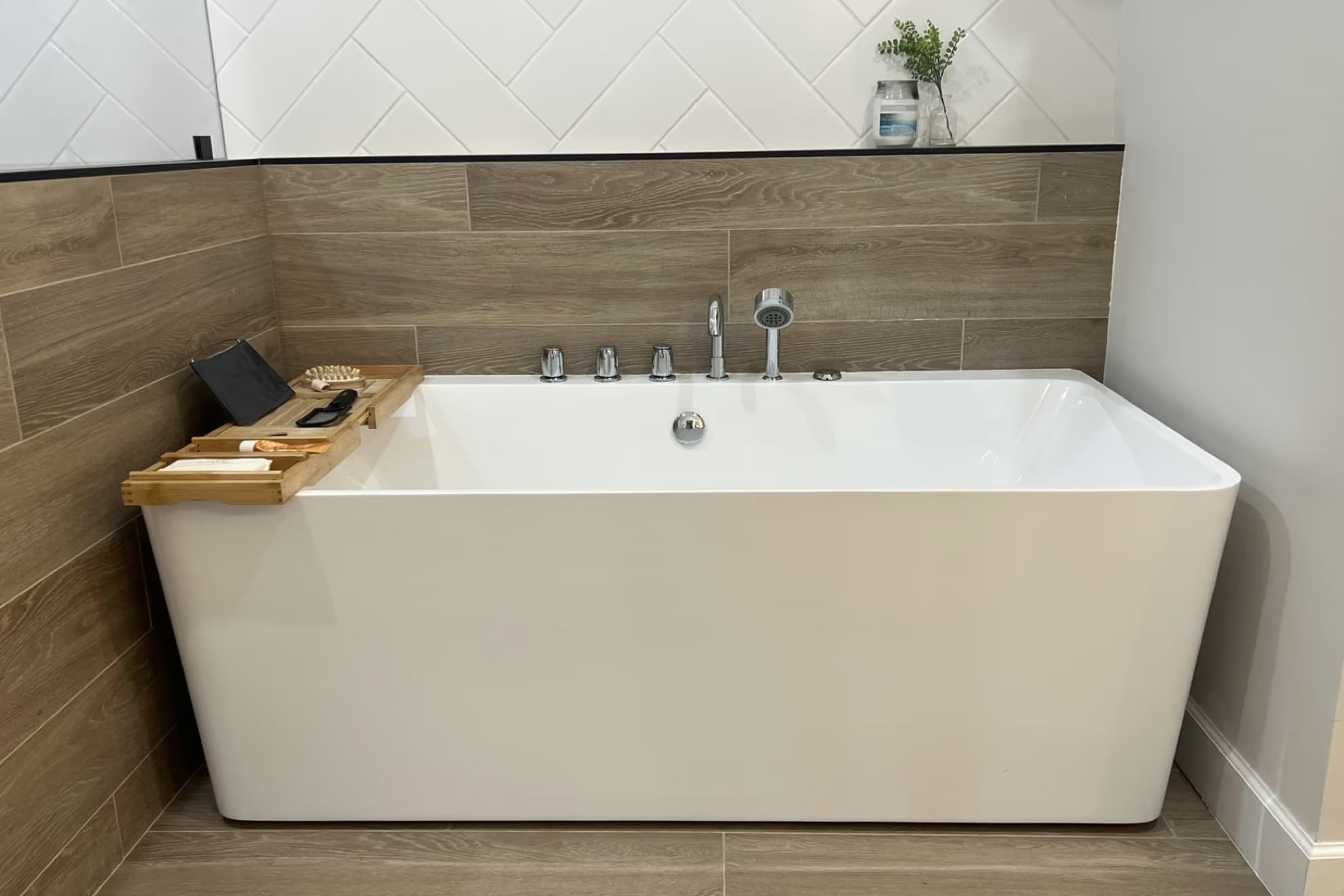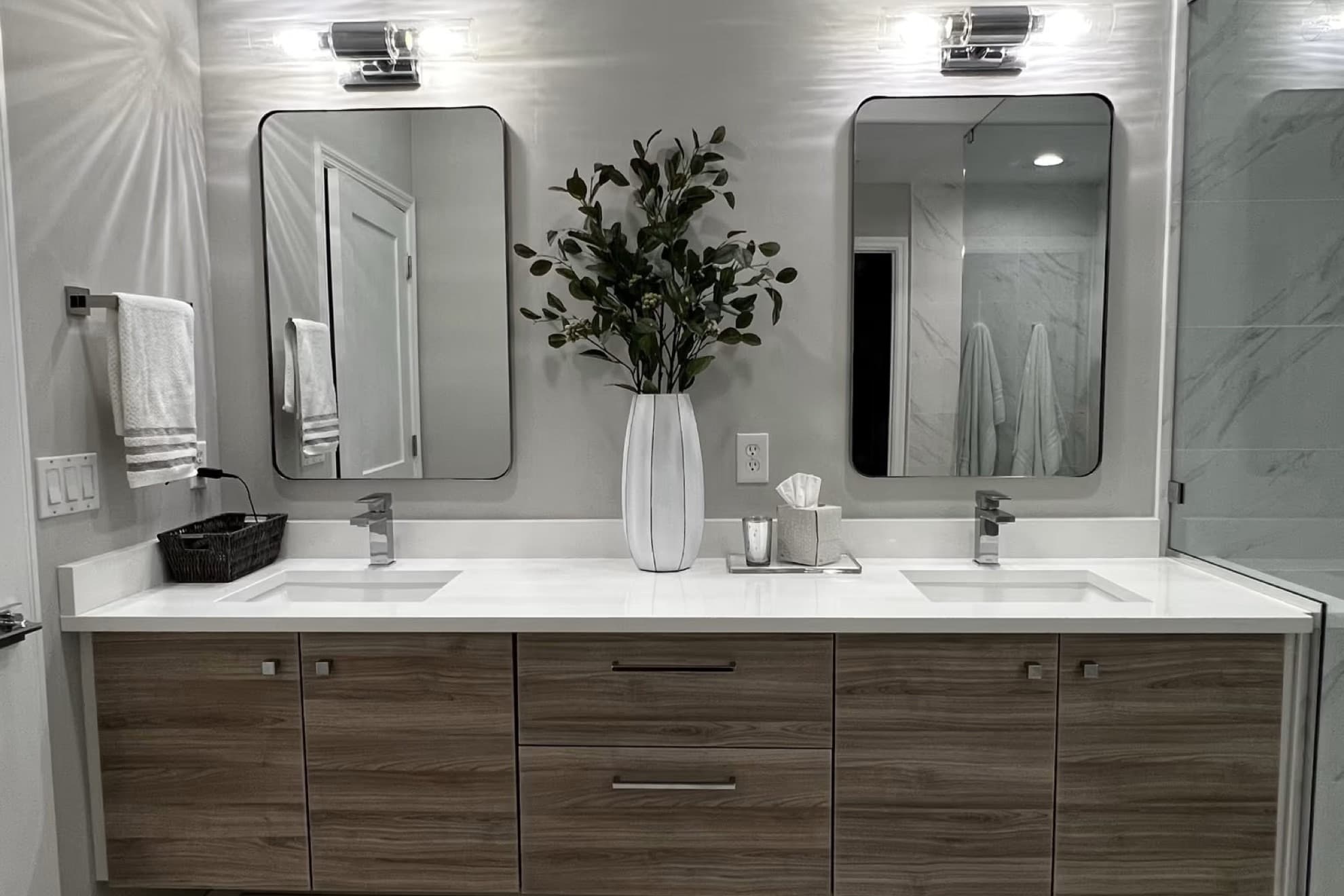
The worst way to learn about the 50 percent rule is at the permit counter. The kitchen is designed, the cabinets are picked, and then the review comes back saying the project is too big for the building it is going into.
On Sanibel and Fort Myers Beach, that is a real risk. Both the City of Sanibel and the Town of Fort Myers Beach review permits for repairs and improvements against the rule.
Here is the short answer. If the cost of a remodel equals or exceeds 50 percent of the building's market value, and the building does not already meet current flood rules, the whole structure has to be brought into compliance, and that can mean elevating it. So on the islands, the first question for a kitchen or bathroom is not the layout. It is how much room the building's value leaves for the work.
Below is what the rule says, how each island applies it, what counts toward the total, and a worked example of the math. For the full project, start with kitchen remodeling in Southwest Florida or bathroom remodeling in Southwest Florida.
What the 50 Percent Rule Says
The 50 percent rule is the everyday name for what federal flood rules call substantial improvement. It comes from the National Flood Insurance Program, and the definition is in 44 CFR 59.1.
That section says substantial improvement "means any reconstruction, rehabilitation, addition, or other improvement of a structure, the cost of which equals or exceeds 50 percent of the market value of the structure before the 'start of construction' of the improvement."
The same section covers storm damage. Substantial damage "means damage of any origin sustained by a structure whereby the cost of restoring the structure to its before damaged condition would equal or exceed 50 percent of the market value of the structure before the damage occurred."
Two things in those sentences matter for a remodel. The test is cost against the market value of the structure, not the land. And "any reconstruction, rehabilitation, addition, or other improvement" is wide enough to take in a kitchen or a bathroom.
The building department for your address enforces these rules through its own floodplain ordinance and procedures, so it has the final word on how the 50 percent rule applies to your project.
How the City of Sanibel Reads the Rule
Sanibel reviews scopes at permit time. Its flood information page says structures "proposing a scope of work for repairs, alterations, general improvements, demolition, etc., are reviewed for Substantial Damage or Substantial Improvement qualifications (a.k.a the FEMA 50% Rule)."
The page then says what happens when a building crosses the line. Here is the City's summary, word for word:
"If the cost of repair or improvements exceeds 50% of the market value of a building that is not currently compliant (e.g. lack of flood openings, mechanical or electrical equipment is below base flood elevation, or areas below base flood elevation are used for purposes other than parking, storage and/or access), the structure must be brought into current floodplain management standards."
Notice the wording. That summary says "exceeds 50%." On the same page, the City's definition of substantial improvement says a cost that "equals or exceeds 50%." The federal definition also says "equals or exceeds." If your scope lands right at the line, ask the City which test it applies.
For the value, the City uses the building value on the Lee County Property Appraiser's Tax Roll Value Letter, or a private appraisal by an appraiser licensed in Florida.
Sanibel's page does not describe a look-back period for earlier work, so ask the City's Building Department how it counts permits already pulled on your home. The page is also plain about skipping the permit. Work done without one "may be subject to Code Enforcement violations and potential liens placed on the property."
Fort Myers Beach and the Question of Earlier Work
On Fort Myers Beach, the Town's own published guidance does not agree with itself about earlier work. You should know that before you plan a scope.
The Town's substantial improvement page, as it reads on Oct 9, 2026, says: "In addition, Fort Myers Beach requires that the calculation for the value of the improvements or repairs must include all permits obtained in the past five years."
The Town's current code says something different. Its floodplain definitions are in Section 6-494 of the Town code, last amended in April 2024. That section defines substantial improvement as "Any repair, reconstruction, rehabilitation, addition, or other improvement of a building or structure, the cost of which equals or exceeds 50 percent of the market value of the building or structure before the improvement or repair is started." It does not mention a five-year period.
A Town Building Services FAQ answer points the same way. It says "there is not a cumulative clause (e.g. all repairs over a 5 year period) in the definition of substantial improvement or substantial damage in the FMB floodplain ordinance."
So ask the Town's Community Development staff, in writing, whether permits from earlier years on your home count toward your project. Get that answer before the design is final, because it can move the ceiling by the cost of a roof or a window package.
The Town also tracks work that needs no permit. Its 50 percent rule FAQ, dated February 2023, says: "Even if a permit is not required by the Florida Building Code (e.g., renovation of cabinets, countertops, painting, etc.), a Repair Improvement Cost Form is still required to be submitted to the town to track the cumulative improvement to the structure as it relates to the 50% rule."
What Counts Toward the Total in a Kitchen or Bath
This is where island kitchens and bathrooms get caught. They are the rooms where most of the remodel money goes, and nearly all of it counts.
The Fort Myers Beach FAQ lists what goes in. "These costs include all materials, labor, built-in appliances, overhead, profit, demolition, and repairs made to the structure."
It also closes the do-it-yourself route. The FAQ values owner labor at going wage rates and donated materials at actual cost, and it says: "Improvement costs cannot be discounted to keep the cost estimate below 50%."
The same FAQ lists what stays out: "plans, specifications, surveys, building permits, and other items separate from or incidental to the repair or improvement of the structure such as outdoor landscaping." Improvements to the land, "such as driveways, pools, seawalls, etc.", are not included either.
| Kitchen or bath item | How the Fort Myers Beach FAQ treats it |
|---|---|
| Cabinets, countertops and finishes | Counted, and logged by the Town even when no permit is needed. |
| Built-in appliances | Counted by name. |
| Demolition of the old room | Counted by name. |
| Contractor overhead and profit | Counted by name. |
| Owner labor or donated materials | Counted at actual cost and going wage rates, never discounted. |
| Plans, surveys and permit fees | Excluded. |
That table reads the Town of Fort Myers Beach FAQ. Sanibel's page does not publish an item list, so confirm with the City how it counts your scope.
The Value That Sets the Ceiling
The other half of the test is the building's market value. Both islands start from the Lee County Property Appraiser.
The Fort Myers Beach FAQ walks through it. You open the Tax Roll Value Letter and find the "Building Value." Then, in the FAQ's words, "Use half of this value (divide by 2) to determine the '50% rule' threshold for the building."
If you think that value is low, both islands accept an appraisal by a property appraiser licensed in Florida. One shortcut is ruled out. The Town's FAQ says replacement cost cannot stand in for market value, because "Replacement cost is often much greater than market value."
A Worked Example, With Made-Up Numbers
The numbers below are hypothetical. They are not a quote, and they are not any real home. They only show how the math works.
| Step | Hypothetical amount |
|---|---|
| Building value on the Tax Roll Value Letter | $400,000 |
| 50 percent threshold (building value divided by 2) | $200,000 |
| Kitchen and primary bath scope, fully priced | $165,000 |
| 15 percent contingency on that scope | $24,750 |
| Scope plus contingency | $189,750 |
| A $30,000 roof permitted three years earlier, if the office counts it | $219,750 |
Priced alone, the remodel sits $35,000 under the line. With the contingency added, the margin shrinks to $10,250. If the office counts the earlier roof, the total passes $200,000, and the conversation changes from a remodel to bringing the whole building into compliance.
That is why the contingency belongs in the math. A contingency is money set aside for repairs found once walls and floors are open, and the Fort Myers Beach FAQ counts "repairs made to the structure." Measure the threshold against the price plus the contingency, not the price alone.
Planning a Kitchen or Bath Around the Threshold
The rule does not stop a remodel. It changes the order of the decisions.
- Find the building value first. Pull the Tax Roll Value Letter before anyone draws a layout. Half of that building value is the ceiling the scope has to fit under.
- Ask about earlier work. Ask the City or the Town, in writing, whether permits already pulled on your home count toward the total.
- Price the whole room. Demolition, built-in appliances, labor, overhead and profit all count. An estimate that leaves them out is not the number the review will use.
- Add the contingency to the total. Plan against the price plus the contingency, so a repair found during demolition does not push the project over the line halfway through.
- Decide what the project is. If the scope fits under the threshold, design to it. If it does not, the project becomes bringing the building into compliance, which is a different project with a different budget.
None of this is a ruling on your home. Whether a building is already compliant, and what it would take to make it compliant, is a question for the City or the Town. The Fort Myers Beach FAQ notes that "An Elevation Certificate is needed to determine the elevation at which a structure is built," so ask whether one is already on file for your home.
Frequently Asked Questions
Does the 50 percent rule apply to a kitchen remodel?
It can. The federal definition covers "any reconstruction, rehabilitation, addition, or other improvement of a structure." A kitchen counts if the building is in a flood zone, is not already compliant, and the cost reaches 50 percent of the building's market value.
Does the rule use the land value or the house value?
It uses the structure only. Both islands use the building value from the Lee County Property Appraiser, or a Florida licensed appraisal. On Fort Myers Beach, land improvements such as pools and seawalls are left out.
Is the 50 percent rule cumulative on Fort Myers Beach?
The Town's published guidance conflicts. Its substantial improvement page says permits from the past five years are included. Its current code definition and one of its own FAQ answers say there is no cumulative clause. Ask the Town in writing before you set the scope.
Can I keep my costs under 50 percent by doing some of the work myself?
No. The Fort Myers Beach FAQ says labor is valued at the going wage for the work and that costs "cannot be discounted to keep the cost estimate below 50%."
An Island Remodel Should Be Planned Against the Number
The horror story on the islands is a design the homeowner approves and the review refuses. The fix is having the full cost on paper before the design is final.
HomeWorks is owned by Chad and Lyndee and licensed as a Florida certified building contractor, CBC-1261775. Chad is on every project. Our quotes carry a 15 percent contingency disclosed up front, so it is on paper from the start and can be counted against the threshold with the rest of the scope. We hold permits in Lee and Collier County, run 81 percent on schedule, and carry 4.8 stars across 60 Google reviews.
If your home is on Sanibel or Fort Myers Beach, see a bathroom remodeled by HomeWorks in Southwest Florida, or request a quote and tell us what you are planning. For the wider permit picture, read our guide to kitchen remodel permits in Lee and Collier County.